

Over the course of this series, we’ve built a comprehensive framework for lifelong physical health. Pillar 1 established the structural foundation — muscle reserve, bone density, and the compound movements that maintain them. Pillar 2 powered the engine — VO2 max, Zone 2 aerobic base, and high-intensity intervals that raise the cardiovascular ceiling. Pillar 3 ensured the machine moves freely — joint health, flexibility, posture correction, and the functional range of motion that daily life demands.
Now we arrive at Pillar 4: Balance and Stability. And we begin with the reason it matters more than any statistic in any of the preceding posts.
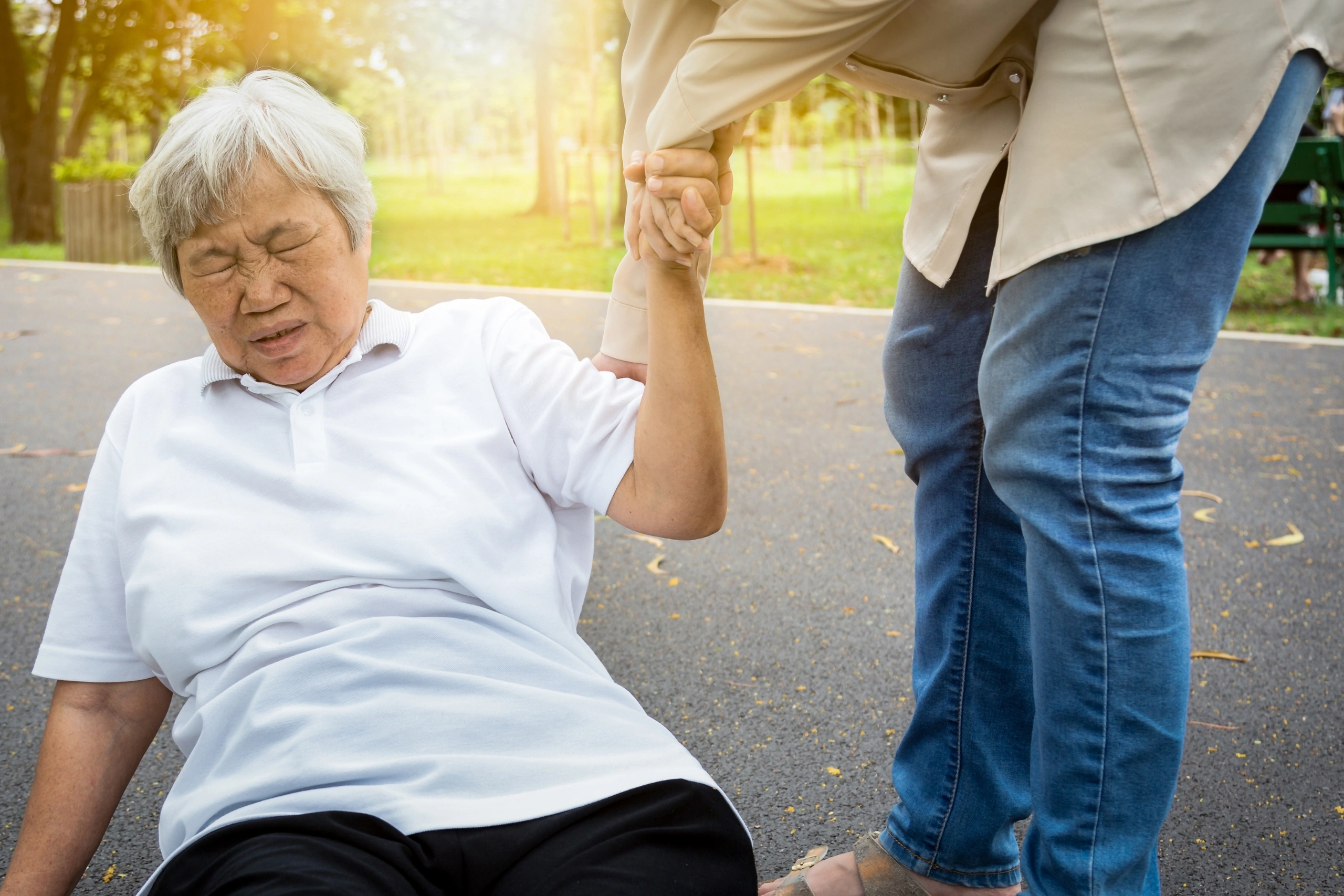
Falls are the leading cause of injury-related death among adults aged 65 and older in the United States. Not car accidents. Not poisonings. Not drownings. Falls. And the numbers are not small, not stable, and not improving.
- 43,020 FALL DEATHS IN ADULTS 65+ IN 2024
- 14M+ OLDER ADULTS WHO FALL EACH YEAR (1 IN 4)
- $101B PROJECTED ANNUAL COST BY 2030
In 2024, 43,020 Americans aged 65 and older died from preventable falls. Over the past decade, fall-related deaths have increased by 51 percent. Emergency department visits for fall injuries have risen 38 percent in the same period. The age-adjusted fall death rate climbed 21 percent between 2018 and 2024 alone — from 64.7 to 78.4 per 100,000 older adults.
These are not abstract numbers. Each one represents a person who tripped on a curb, lost their balance on a wet floor, or stumbled in the dark — and whose body could not absorb the impact, could not recover the stumble, or could not survive the fracture that followed.
The Anatomy of a Fall
To understand why falls are so deadly — and so preventable — you need to understand what actually happens when a person falls.
Falls are not random accidents. They are the predictable result of systems failure — multiple physical capacities declining simultaneously until a minor perturbation overwhelms the body’s ability to respond. A younger person with strong legs, good balance, fast reaction time, and dense bones might trip on the same curb and catch themselves without thinking. An older person with weakened muscles, impaired balance, slowed reflexes, and fragile bones hits the ground — and breaks.
THE SYSTEMS THAT PREVENT FALLS — AND WHAT HAPPENS WHEN THEY FAIL
+ Muscle strength
Catch yourself+ Balance control
Detect the sway+ Reaction speed
Respond in time+ Bone density
Survive impact+ Vision & proprioception
See & feel position
This is why falls are the convergence point of everything we’ve discussed across all four pillars. A fall is not a single-system problem — it is the result of multiple systems failing below their critical thresholds simultaneously. Weak muscles (Pillar 1) can’t generate the force needed to catch a stumble. Poor cardiovascular fitness (Pillar 2) contributes to fatigue and reduced alertness. Restricted mobility (Pillar 3) limits the range of motion available for recovery movements. And inadequate balance and stability (Pillar 4) means the body cannot detect and correct postural perturbations before they become falls.
The Cascade After a Fall
The immediate consequences of a fall are often severe. Hip fractures account for the largest share of fall-related medical costs, and the statistics surrounding them are grim. According to the CDC, 83 percent of hip fracture deaths and 88 percent of hip fracture emergency department visits and hospitalizations in 2019 were caused by falls. Nearly 319,000 older adults are hospitalized for hip fractures each year.
But the cascade doesn’t end with the fracture. Within one year of a hip fracture, approximately 20 percent of patients die from complications — pneumonia, blood clots, infection, and the rapid deconditioning that occurs during bed rest. Of those who survive, the majority require assistive devices and many never return to independent living. Forty percent of nursing home admissions are precipitated by a fall.
Falls are also the most common cause of traumatic brain injuries in older adults. Even falls that don’t result in fracture or TBI often trigger a psychological cascade that is nearly as damaging as the physical injury: the fear of falling.
After a first fall, an older adult’s risk of falling again doubles. And the fear of falling — even in those who haven’t fallen — leads to activity restriction, social isolation, physical deconditioning, and ultimately, the very weakness that makes the next fall more likely and more dangerous.
This is the vicious cycle of falls: a fall leads to fear, which leads to inactivity, which leads to muscle loss, balance deterioration, and bone density decline — which leads to the next fall being worse. The cycle, once it begins, accelerates unless deliberately interrupted.
The Risk Factors Are Modifiable
Here is the most important fact about falls: the majority of the risk factors that contribute to them are modifiable. They can be changed. They can be trained. They can be improved — at any age.
MUSCLE WEAKNESS
Weak legs cannot generate the rapid corrective forces needed to recover from a stumble. Sarcopenia — the age-related loss of muscle mass — is a primary driver. Addressed by Pillar 1: resistance training.POOR BALANCE
The vestibular system, proprioception, and postural control all decline with age and disuse. These systems are trainable — and training them is the core of Pillar 4.GAIT ABNORMALITIES
Shuffling gait, reduced stride length, and poor foot clearance increase trip risk. Caused by muscle weakness, joint stiffness, and reduced proprioception — all trainable.IMPAIRED VISION
Poor depth perception, reduced contrast sensitivity, and uncorrected vision problems contribute to falls. Regular eye exams and appropriate correction are essential.MEDICATION EFFECTS
Sedatives, antidepressants, antihypertensives, and polypharmacy (4+ medications) significantly increase fall risk through dizziness, drowsiness, and impaired coordination.ENVIRONMENTAL HAZARDS
Loose rugs, poor lighting, cluttered walkways, wet surfaces, and uneven ground. Simple home modifications reduce fall risk significantly.LOW BONE DENSITY
Osteoporotic bones turn minor falls into major fractures. Addressed by the bone-loading benefits of Pillar 1 resistance training.FEAR OF FALLING
Restricts activity, leading to deconditioning, which increases actual fall risk. Exercise programs that build confidence are among the most effective interventions.
What the Evidence Says About Prevention
A 2025 systematic review of 27 randomized controlled trials examined the effectiveness of exercise-based interventions for fall prevention in community-dwelling older adults. The findings were striking — and remarkably consistent.- TAI CHI / TAI JI QUAN 31–58% fall reduction Slow, deliberate movements that challenge balance, coordination, and weight shifting. One of the most studied and consistently effective interventions.
- OTAGO EXERCISE PROGRAM 23–40% fall reduction A home-based program of strength and balance exercises designed for older adults. Individually prescribed and progressively challenging.
- MULTIMODAL TRAINING 20–45% fall reduction Programs combining balance, strength, and flexibility training. The broader the approach, the more risk factors addressed simultaneously.
- PERTURBATION-BASED TRAINING 50–75% fall reduction Controlled destabilization that teaches the body to recover from unexpected balance challenges. The strongest effect sizes of any intervention studied.
THE KEY INSIGHT
Falls are not inevitable consequences of aging. They are predictable outcomes of specific, identifiable, and modifiable risk factors — most of which are directly addressed by the training principles we’ve established across all four pillars. Muscle weakness? Pillar 1. Cardiovascular fatigue? Pillar 2. Restricted mobility? Pillar 3. Impaired balance and reaction time? Pillar 4. The 4 Pillars framework is, in its entirety, a fall prevention program.
Why Balance Declines — And Why It Doesn’t Have To
Balance is maintained by the integration of three sensory systems: the visual system (what you see), the vestibular system (the inner ear’s detection of head position and motion), and the somatosensory system (proprioception — the body’s awareness of where it is in space through receptors in muscles, tendons, and joints).
Each of these systems naturally declines with age. Visual acuity decreases. Vestibular sensitivity diminishes. Proprioceptive receptors become less responsive. But the critical point — the point that changes the trajectory of aging — is that all three systems respond to training.
Balance is a skill, not a fixed trait. Like strength, like cardiovascular fitness, like flexibility, it improves with practice and deteriorates with neglect. The person who challenges their balance regularly — through single-leg stands, tandem walking, eyes-closed balance drills, and dynamic movement on uneven surfaces — maintains the neural pathways and muscular responses that keep them upright. The person who does not gradually loses the capacity to correct a stumble until the correction comes too slow, too weak, or not at all.
Where All Four Pillars Converge
Falls are the most visible and devastating outcome of the physical decline that all four pillars are designed to prevent. And this is not coincidental — it is structural. Each pillar addresses a specific system that contributes to fall risk:
Pillar 1 — Strength Training: Builds the muscle power needed to catch yourself when you stumble and the bone density needed to survive impact if you don’t. The compound lifts — squats, deadlifts, lunges, carries — train the exact movement patterns used in fall recovery.
Pillar 2 — Cardiovascular Endurance: Maintains the energy, alertness, and reduced fatigue that prevent the inattention and exhaustion that contribute to falls. Cardiovascular fitness is independently associated with reduced fall risk in older adults.
Pillar 3 — Mobility and Flexibility: Preserves the range of motion needed for recovery movements — stepping wide, reaching for a handrail, absorbing an unexpected perturbation. Hip mobility, ankle dorsiflexion, and thoracic rotation are all critical for fall avoidance.
Pillar 4 — Balance and Stability: Directly trains the postural control, proprioception, vestibular function, and reactive balance that detect and correct perturbations before they become falls.
A fall prevention program that only trains balance is incomplete. A training program that builds strength, cardiovascular fitness, mobility, and balance is, by definition, a fall prevention program. That is the 4 Pillars framework.
Welcome to Pillar 4
This post establishes the stakes. Falls kill more older adults than any other injury mechanism. They cost the healthcare system tens of billions of dollars annually. They strip independence from millions of people who could have been protected by training that is simple, accessible, and remarkably effective.
In the posts that follow, we’ll explore the specific balance training methods that reduce fall risk — from single-leg stance progressions and perturbation training to vestibular rehabilitation and the role of dual-task exercises. We’ll provide the practical protocols, the progression frameworks, and the evidence that supports each approach.
But the foundational message of Pillar 4 is this: balance is not something you passively lose. It is something you actively maintain — or actively neglect. And the difference between those two paths is, for millions of older adults every year, the difference between independence and dependence, between standing upright and lying on the ground, between life and death.
The first three pillars built the body. Pillar 4 keeps it standing.
THE BOTTOM LINE
Falls are the leading cause of injury-related death in adults over 65 — killing over 43,000 Americans in 2024, with the death rate rising 21% in just six years. One in four older adults falls each year. Hip fractures carry a 20% one-year mortality rate. The annual cost is projected to exceed $101 billion by 2030. But the evidence is equally clear on the other side: exercise-based interventions reduce falls by 20 to 75 percent depending on the approach. Tai Chi, strength-balance programs, and perturbation-based training all show significant, reproducible effects. Every pillar in this series contributes to fall prevention — muscle strength, cardiovascular fitness, mobility, and balance. The 4 Pillars framework is not just a health program. It is, in its totality, the most comprehensive fall prevention program the evidence supports. Pillar 4 is where it all comes together.