


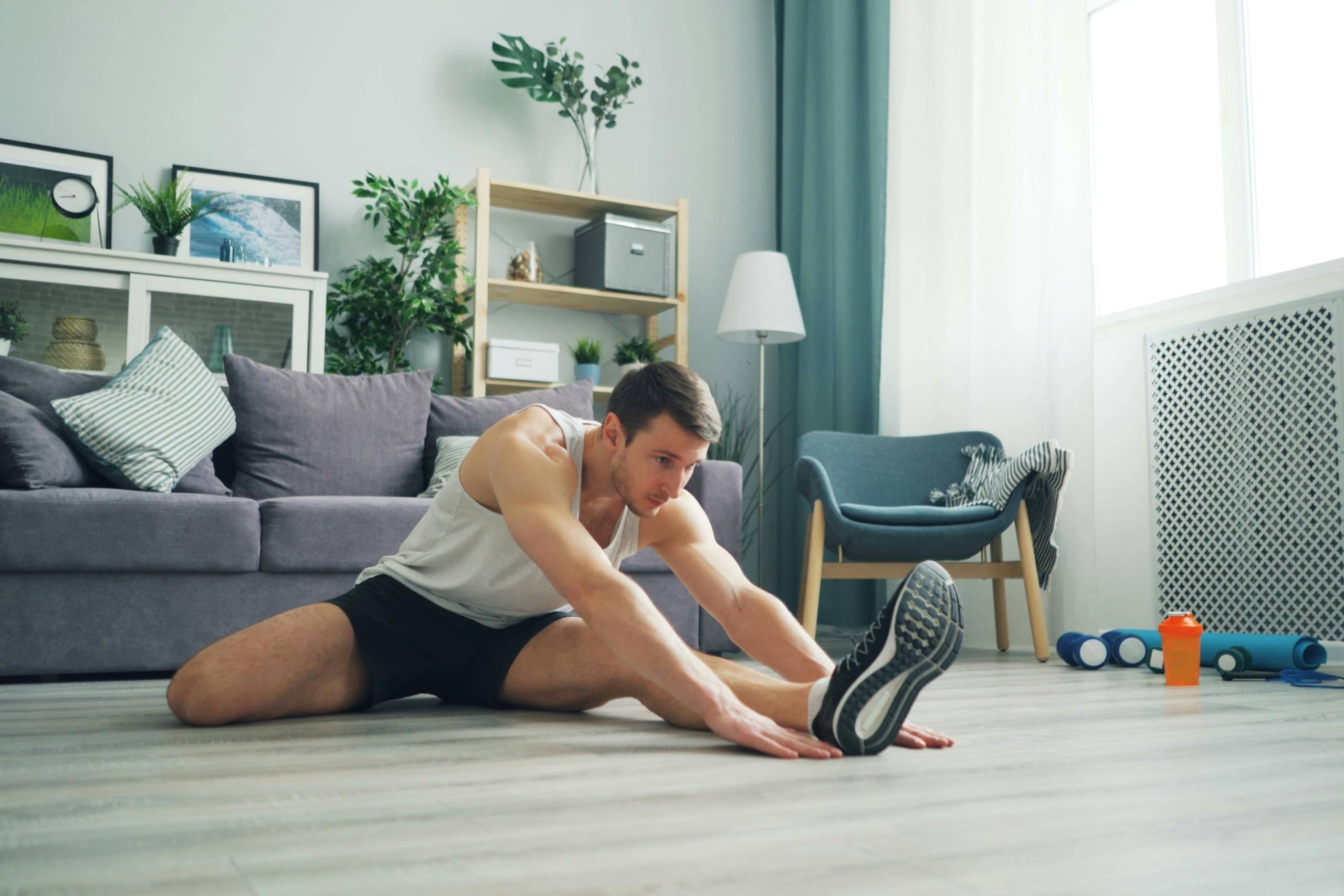
Strength builds the structure. Cardio powers the engine. But without flexibility, mobility, and movement variety, the whole machine seizes up — and the research now says it might cost you years.
Welcome to Pillar 3.
In Pillar 1, we built the structural foundation — muscle reserve, bone density, and functional strength through compound resistance training.
In Pillar 2, we powered the engine — VO2 max, Zone 2 aerobic base, and high-intensity intervals for cardiovascular ceiling.
Now, in Pillar 3, we’re focused on the system that keeps the entire machine moving freely: mobility and flexibility.
In our first Pillar 3 post — “Joint Health: Use It or Lose It” — we established why your joints are living, adapting structures that require regular movement to stay healthy. Now we go deeper: into the specific practices, modalities, and research that make flexibility actionable — and the surprising data showing it may predict how long you live.
If strength is the chassis and cardio is the engine, then flexibility, mobility, and movement variety are the lubrication — the system that keeps every joint, tendon, and connective tissue moving without restriction. Without it, even the strongest, fittest body gradually seizes up.
Flexibility Predicts Survival
In 2024, a landmark prospective cohort study published in the Scandinavian Journal of Medicine & Science in Sports delivered a finding that should have reshaped how we think about stretching. Led by Dr. Claudio Gil Araújo at the CLINIMEX Exercise Clinic in Rio de Janeiro, the study followed more than 3,100 middle-aged adults for nearly 13 years. Researchers assessed body flexibility using a comprehensive test of 20 passive movements across seven major joints, producing an overall score called the Flexindex.
The results were unambiguous: reduced flexibility was strongly and independently associated with higher mortality risk — even after adjusting for age, body mass index, and health status.
- 1.87× HIGHER DEATH RISK FOR MEN WITH LOW FLEXIBILITY
- 4.78× HIGHER DEATH RISK FOR WOMEN WITH LOW FLEXIBILITY
- ~13 yrs FOLLOW-UP PERIOD (3,139 PARTICIPANTS)
The effect was particularly pronounced in women, where low flexibility carried nearly a fivefold increase in mortality risk compared to those with high flexibility scores. The pattern emerged early in the follow-up period, suggesting that flexibility may serve as a meaningful early indicator of overall health status — not just a cosmetic measure of how far you can touch your toes.
Being aerobically fit and strong and having good balance have been previously associated with low mortality. We were able to show that reduced body flexibility is also related to poor survival in middle-aged men and women.
DR. CLAUDIO GIL ARAÚJO, CLINIMEX EXERCISE CLINIC, 2024
This study didn’t exist in isolation. The same research group had previously shown that the ability to rise from a sitting position on the floor — a test of flexibility, strength, and coordination combined — is a strong predictor of longevity, and that inability to balance on one leg for 10 seconds predicts increased mortality risk over the following seven years. Together, these findings paint a consistent picture: the way your body moves through space — its range of motion, its balance, its coordination — is a powerful signal of how well and how long you will live.
Why Flexibility Matters Beyond the Stretch
At first glance, the connection between touching your toes and living longer might seem like a stretch — in every sense. But the mechanisms linking flexibility to health outcomes are more substantial than they appear.
Vascular health.
Multiple clinical studies have demonstrated a link between musculoskeletal stiffness and arterial stiffness. People with poor flexibility tend to have less elastic blood vessels, which is a recognized risk factor for cardiovascular disease. Some research has shown that static stretching exercises can actually reduce arterial stiffness, suggesting a direct physiological connection between the flexibility of your muscles and the flexibility of your arteries.
Fall prevention.
Falls are one of the leading causes of injury, disability, and death in older adults. Flexible muscles and joints allow greater range of motion during stumbles, enabling recovery movements that stiff bodies cannot execute. Flexibility also supports better balance and proprioception — the body’s awareness of its position in space — both critical for preventing falls.
Fascia and connective tissue health.
The body’s fascial network — the connective tissue that encases muscles, organs, and joints — requires movement and variety to stay hydrated, elastic, and functional. Prolonged sedentary behavior causes fascia to become stiff and adhered, restricting movement and contributing to chronic pain. Regular stretching and varied movement patterns keep this tissue healthy and responsive.
Injury resilience.
Flexible muscles are less prone to strains, tears, and overuse injuries. When muscles and tendons have adequate range of motion, they can absorb forces more effectively — protecting not just the muscle itself but the joints and bones it surrounds.
Joint longevity.
Range of motion exercises help maintain the health of cartilage, synovial fluid, and joint capsules. Without regular movement through full ranges, joints stiffen, cartilage degrades, and conditions like osteoarthritis accelerate. Movement is literally the nutrient delivery system for your joints — cartilage has no direct blood supply and relies on the compression and release of movement to circulate fluid.
Yoga: More Than Stretching
If flexibility is the overlooked component of physical health, yoga is its most effective and evidence-based delivery system — because it offers far more than stretching alone.
A 2026 quasi-experimental study of older adults found that a 12-week yoga program significantly improved balance, functional mobility, fear of falling, anxiety, and depression — while a control group actually deteriorated on several of those same measures. A randomized controlled trial comparing Hatha yoga to conventional stretching-strengthening exercises in older adults found that yoga was equally effective at improving balance, strength, flexibility, and mobility, with medium to large effect sizes across all measures.
What makes yoga uniquely valuable is that it integrates multiple fitness components simultaneously. A single yoga session typically involves flexibility (stretching and lengthening muscles), strength (holding body weight in challenging positions), balance (single-leg poses, inversions), proprioception (awareness of body position without visual cues), breathing regulation (pranayama), and stress reduction (mindfulness, meditation). No other single modality packages this many health-relevant adaptations into one practice.
THE RESEARCH ON YOGA AND AGING
Systematic reviews and meta-analyses have found that yoga improves balance, mobility, and flexibility in adults over 60. A 2026 study showed significant improvements in balance, functional mobility, fear of falling, anxiety, and depression after just 12 weeks. At the cellular level, regular yoga practice has been shown to reduce inflammatory markers (IL-6, TNF-alpha), increase brain-derived neurotrophic factor (BDNF), and promote neuroplasticity — suggesting benefits that extend far beyond the musculoskeletal system.
Movement Variety: The Missing Ingredient
There’s a subtler point embedded in all of this research that deserves explicit attention: the body thrives on variety. Muscles, joints, and connective tissues are designed to move in multiple planes, through diverse ranges of motion, under varying loads and speeds. A training program that includes only sagittal plane movements (forward and back, like squats and deadlifts) neglects the frontal and transverse planes — the lateral movements, rotations, and diagonal patterns that real life demands.
This is where movement variety becomes critical. The person who only lifts weights and runs is missing rotational patterns, lateral movements, overhead mobility, and the ability to transition between positions on the floor. These movement gaps may not matter at 35, but by 65, they become the specific deficits that lead to falls, injuries, and loss of independence.
YOGA
Multi-plane movement, balance, flexibility, strength, and mindfulness in a single practice. Adaptable from chair yoga to vigorous vinyasa. 2–3 sessions per week.DYNAMIC STRETCHING
Controlled movements through full range of motion. Hip circles, arm swings, leg swings, spinal rotations. Ideal as a pre-workout warm-up. 5–10 minutes daily.STATIC STRETCHING
Holding positions for 20–30 seconds per muscle group. Best post-exercise or as a standalone evening routine. Focus on hips, hamstrings, shoulders, and spine.TAI CHI & MOVEMENT FLOW
Slow, deliberate movement through multiple planes with continuous balance challenges. Especially effective for older adults and fall prevention.MOBILITY DRILLS
Targeted joint work — controlled articular rotations, 90/90 hip switches, thoracic spine openers. Maintains joint health through full available range. 5–10 minutes daily.RECREATIONAL PLAY
Swimming, dancing, hiking on uneven terrain, recreational sports. Unpredictable movement patterns that challenge the body in ways structured exercise cannot.
The goal is not to become a contortionist. It’s to maintain a body that can move freely through the full range of movements that daily life requires — bending, reaching, twisting, squatting, kneeling, getting up from the floor — and to preserve that capacity across decades.
The 5-Minute Daily Investment
One of the most encouraging findings from the flexibility research is that the dose required for benefit is remarkably small. You don’t need hour-long yoga classes (though those are valuable). You don’t need a gymnastics background. You need consistency — brief, daily attention to your body’s range of motion.
A 5-MINUTE DAILY FLEXIBILITY ROUTINE
Cat-Cow
30 seconds. Spinal flexion and extension. Wakes up the entire back and core.Hip 90/90
30 seconds per side. Sit with both legs at 90-degree angles and rotate between internal and external hip rotation.World’s Greatest Stretch
30 seconds per side. Lunge position with thoracic rotation. Hits hips, hamstrings, thoracic spine, and shoulders.Standing Forward Fold
30 seconds. Hang forward, bend knees slightly, let gravity stretch the hamstrings and lower back.Shoulder Pass-Through
30 seconds. Use a towel or band to take arms from front to behind the body. Opens chest and shoulders.
Five minutes. Every day. That’s the minimum dose for maintaining range of motion in the major joints that matter most — hips, spine, and shoulders. Add a yoga session two to three times per week for a deeper practice, and you’ve built a flexibility program that sits seamlessly alongside the strength and cardio work from Pillars 1 and 2.
Building the Pillar 3 Framework
This is the second post in our Pillar 3 series: Mobility and Flexibility. In our first post — “Joint Health: Use It or Lose It” — we established why your joints are living structures that require regular movement to maintain their health. Now we’ve gone deeper — into the landmark flexibility-mortality research, the six modalities that matter, and the practical routines that make mobility actionable in five minutes a day.
The pattern across all four pillars is consistent: every component of physical health that matters for longevity is trainable, modifiable, and responsive to consistent effort. Muscle mass and bone density respond to resistance training (Pillar 1). VO2 max responds to aerobic and high-intensity work (Pillar 2). And flexibility — as we’ve now seen — responds to stretching, yoga, and varied movement patterns, with benefits that extend from joint health to arterial function to mortality risk itself (Pillar 3).
Coming next: Pillar 4 — Balance and Stability. The final piece of the longevity framework.
THE BOTTOM LINE
Flexibility is not a luxury. A 2024 landmark study found that reduced body flexibility is strongly associated with higher mortality risk — nearly fivefold in women. Stretching, yoga, and varied movement patterns maintain joint health, prevent falls, support vascular function, and preserve the range of motion that daily life demands. The dose is small: five minutes of daily mobility work plus two to three yoga sessions per week. Combined with the resistance training of Pillar 1 and the cardiovascular conditioning of Pillar 2, Pillar 3 adds the mobility layer that determines not just how long you live, but how freely you move through every year. Don’t skip it. Your joints, your arteries, and your future self are all paying attention.